Yearly Archives: 2024

HOW DO I EXPLAIN TO SOMEONE THAT WRITING IS A JOB?

How do I explain to someone that writing is a job?
This is a question that those who do my job have asked themselves at least once in their lives. Not that it is mandatory to explain it necessarily, but at a certain point you just want to do it.
As for parents and relatives, put a cross on it. Most of them will not understand, at least those like me who have parents from another generation, maybe even two generations ago.
Once you have made peace and understood that the battle with the family is lost, focus on the rest of the world.
Those who work with creativity know it well: when you produce only ideas, so ethereal, impalpable, volatile and gaseous, often you can’t prove that ours is a job. We don’t make necklaces, shoes, furniture or have a shop of something. So make your peace with them too, it won’t help anyway. They won’t understand.
Once you understand this, move on to the next step: let’s take those who do our creative work as a hobby or passion (writers, DJs, musicians, singers, copywriters and many others). Without going into the merits of meritocracy or increasingly miserable engagements, given the enormous quantity of “artists” willing to make any kind of compromise, I happily tell you: forget it. Even with them, the battle is lost. They make ends meet, have fun, do it to earn a little extra or for fun and they really don’t care. Many have a steady job that allows a quiet life and are willing to risk only a small percentage of risk. Like prudent stock packages. So trying to convince many of them (at least those with very low creative or technical qualities) is an impossible task. Forget it.
And those who do the same job as us? They are in your situation, they know it well but between those who complain (and there are many) and those who praise themselves by fearing billions of jobs left and right, we risk giving in to easy grumbling or exhausting envy with a sense of inadequacy and depression attached. So let’s proceed.
Having digested this, let’s try to convince the State, the immense world of VAT numbers and technicians of the quick economy, but honestly, I advise against it, there is no way out.
But then who is left to convince? Have you asked yourselves? The answer seems obvious. Think about it. Who is left?
You stay! We have to convince ourselves every day that this is our job, even when we don’t get invoiced, even when they don’t pay us the invoices or they take 6 months to pay them or a job doesn’t come in even if you pay for it. We have to convince ourselves every day that we are on the right path and that there is no plan B, that there is no parachute job, that we wouldn’t be able to do anything else. That we have to try every damn day. I don’t know why, but I feel that there is and it is immense.
Personally, I try not to betray the child for the man, not to betray myself by doing things I don’t like. It’s not necessarily just a creative issue, all jobs are like that, even the craftsman, the economist or the pharmacist.
And if you are convincing enough with yourself every morning, then raise your head with pride and at least for one day, that damned question will stop tapping in your head.

AT THE VENICE FILM FESTIVAL. A STORY WITHIN HISTORY

This story tells how I got to the red carpet at the Venice Film Festival, but it also contains the story of a moment immortalized from two opposite points of view thanks to a smile stolen from… Shia LaBeouf.
I had always dreamed of photographing actors at the Venice Film Festival, on that famous Red Carpet, but I had never had the contacts or even the opportunity to get there. The year was 2012. That afternoon I was surfing Facebook. I received a message from a certain Gabriele who asked me if I was available to go and do some shooting at the Venice Film Festival for his film magazine, Kinematrix. I don’t believe it! Obviously I immediately gave him my availability, and immediately afterwards he revealed to me that he had the wrong person: he was convinced he was talking to another photographer that he had found on some professional page, but in the end, since we had met, he confirmed me; and this is the first story that for me is incredible!
I finally land at the Festival. From the very first day I had a post  >in the BlackBlock, a room set up specifically for photographers, with high steps like bleachers, from which we can immortalise actors and directors for various magazines. And so I find myself in front of a list of actors that I have always adored, ready to look into the lens for us. Photographer Winona Ryder, Joaquin Phoenix, Robert Redford, Philip Seymour Hoffman, Michael Shannon, James Franco, Pierce Brosnan and of course Shia LaBeouf, who when he arrives on the BlackBlock there is no way to make him smile. How serious! It’s not a funeral! All the photographers shouted “Smile please!” at him, but nothing. As the evening comes, all the photographers, including me, find themselves lined up along the Red Carpet, split in half on both sides. The parade of actors and directors arrives, and again we immortalize them and shout their names hoping that they will look into our lens and give us some interesting, unique expression.
Shia LaBeouf’s moment arrives: he walks down the red carpet and everyone yells at him to smile, but nothing. A unique pout, perhaps to maintain character, who knows. He continues his walk, when he arrives in front of my station. All the photographers are busy shooting from behind their cameras and I, in that moment, keeping my finger ready on the “trigger” like a sniper, reveal my face from behind the camera, look Shia LaBeouf straight in the eyes and when he meets my gaze, I give him a giant smile that he can’t resist, and he returns it! At that moment I took the photo and immortalized her long-awaited expression, while my fellow photographers who saw the scene shouted at me “Bravaaaa!!!” And, just as I capture the actor smiling, a photographer on the other side of the red carpet captures me smiling at Shia. And here is the magic of a double shot that tells a moment captured from two opposite and complementary points of view…

BEACH OR WORK OF ART? IN SHARM EL SHEIK
I have been in Sharm El Sheikh for a few days when a group of Italians, met by chance on the ship, tell me about a very particular beach half an hour from my resort. So we organized a minibus and the next day, no sooner said than done, we all set off together to discover this curious place.
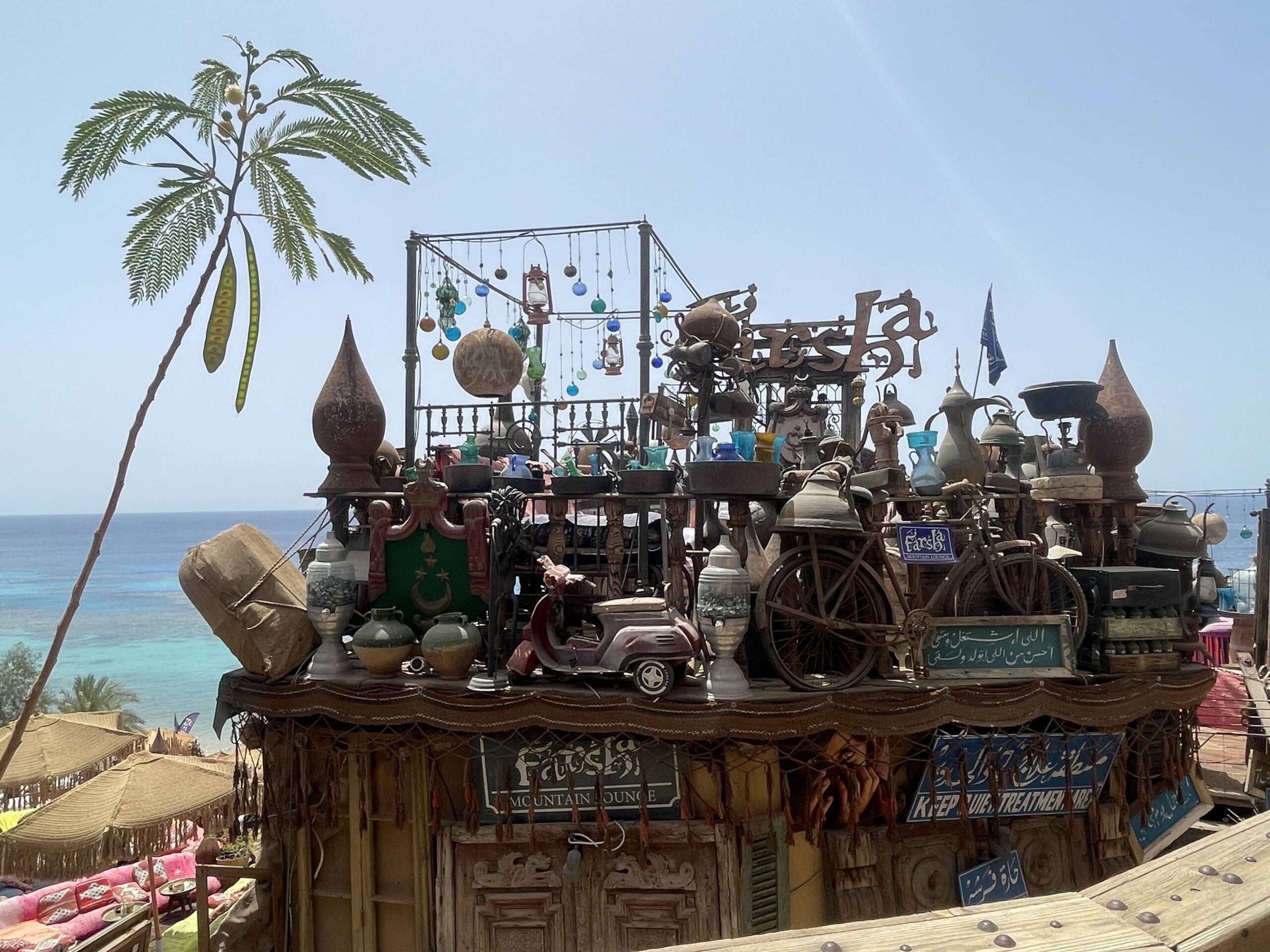
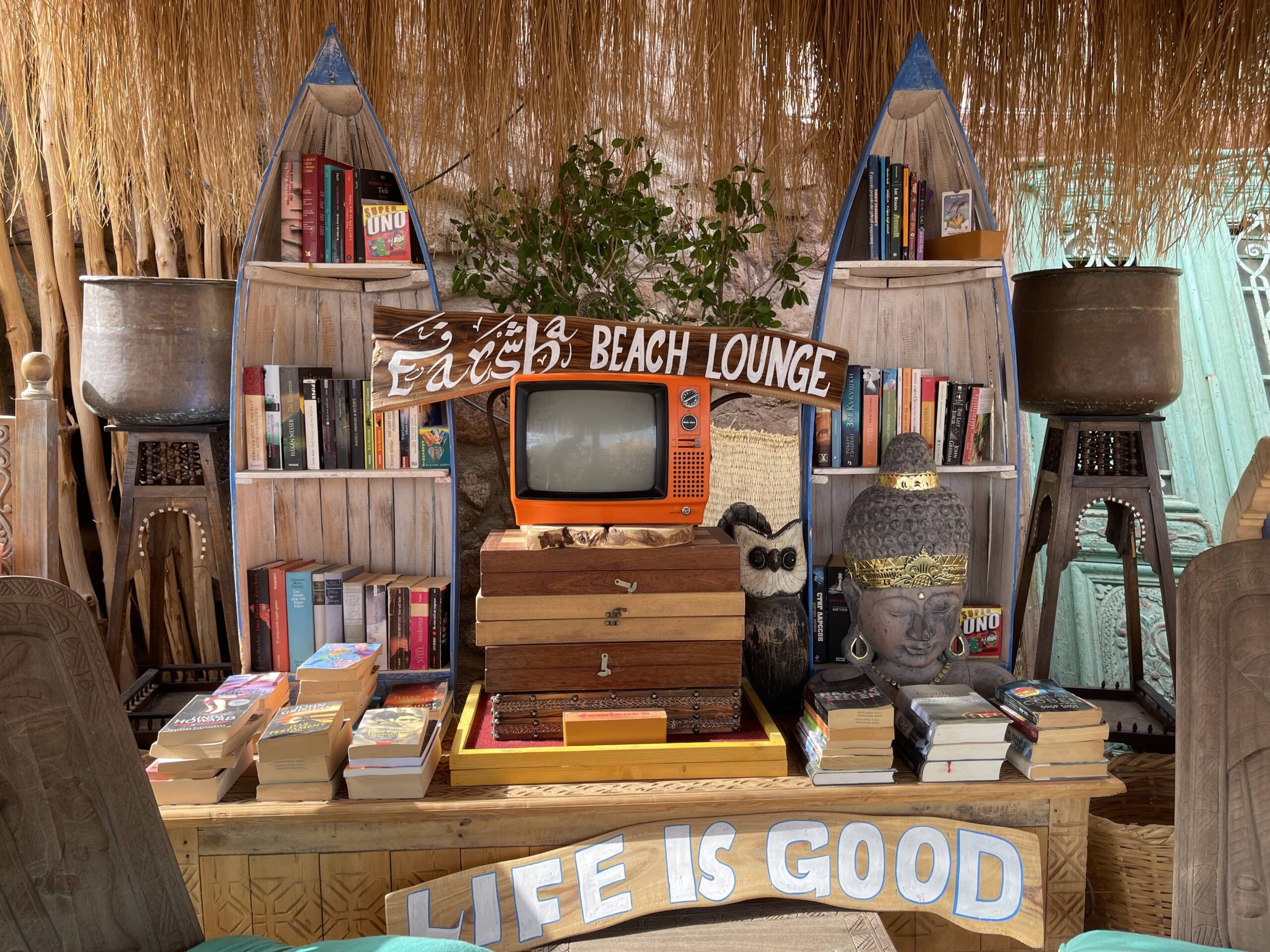
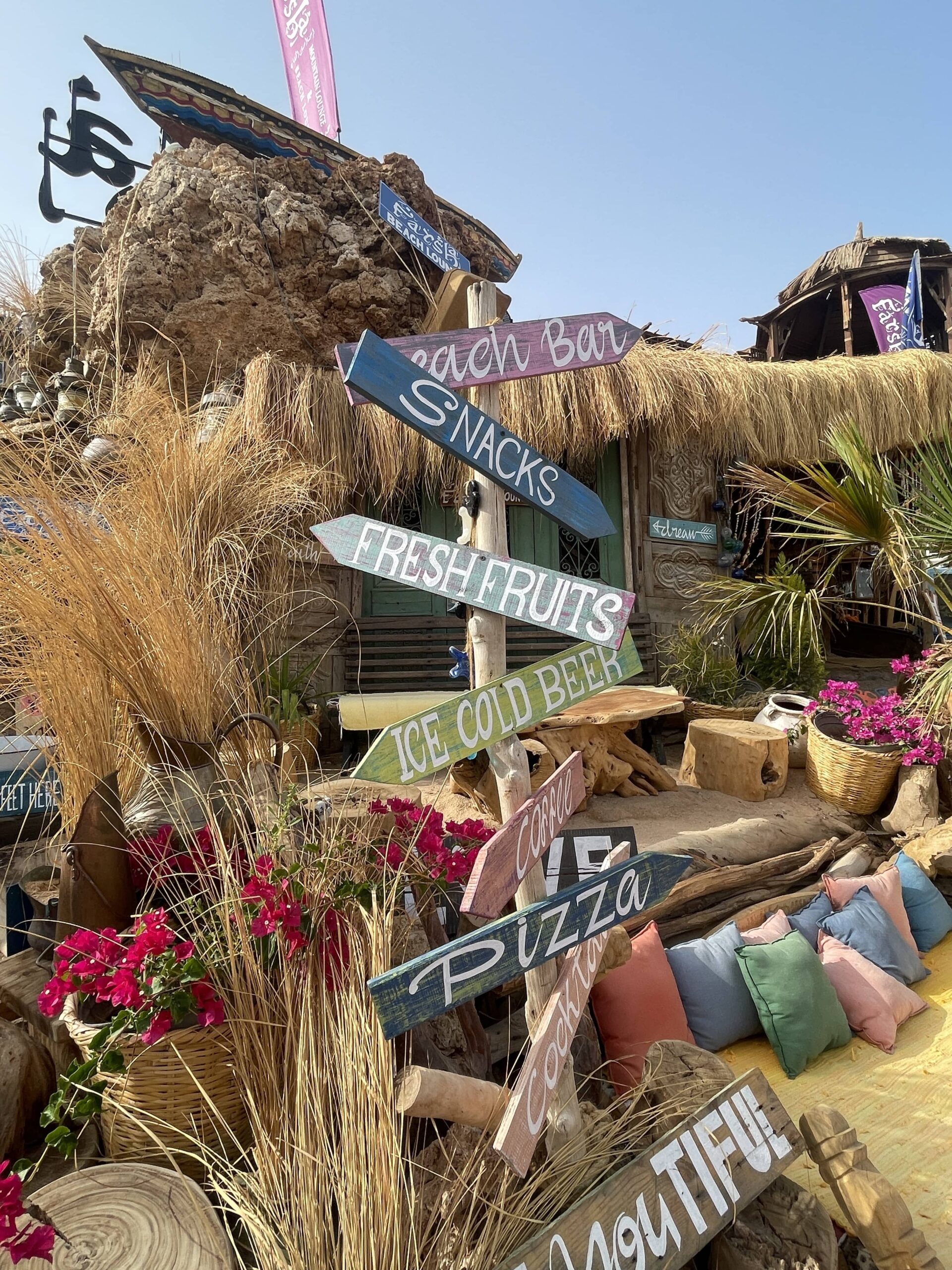
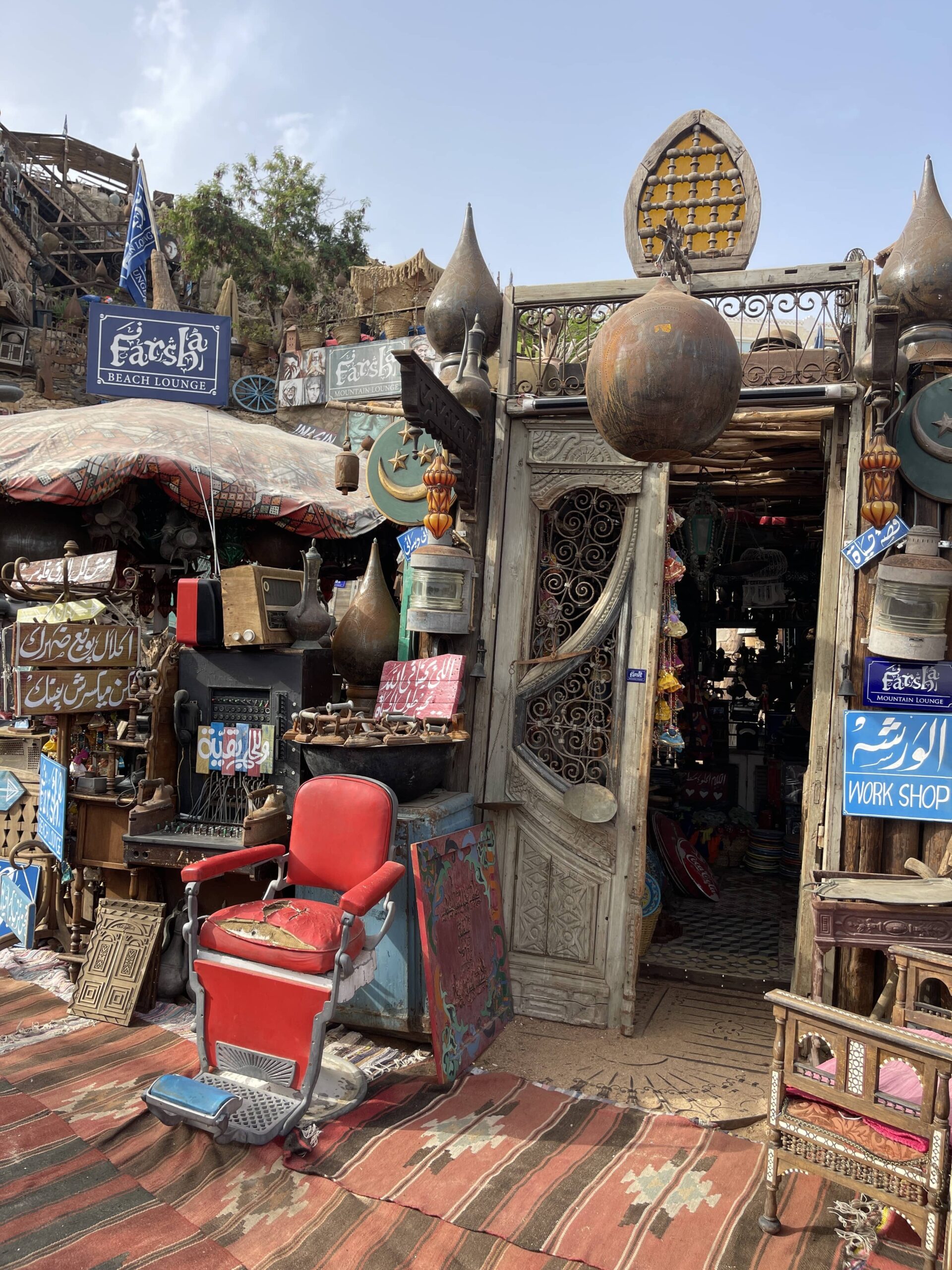
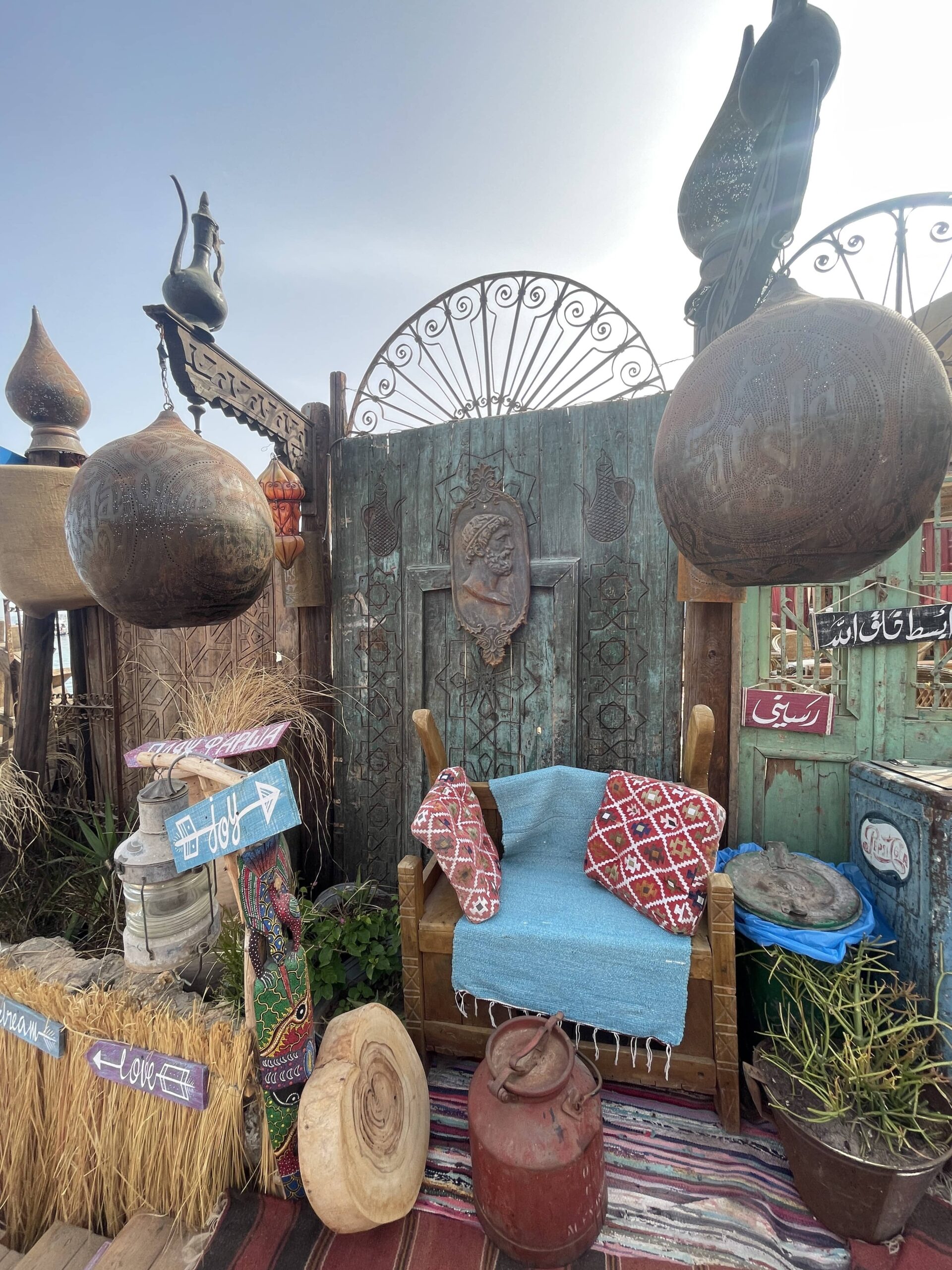
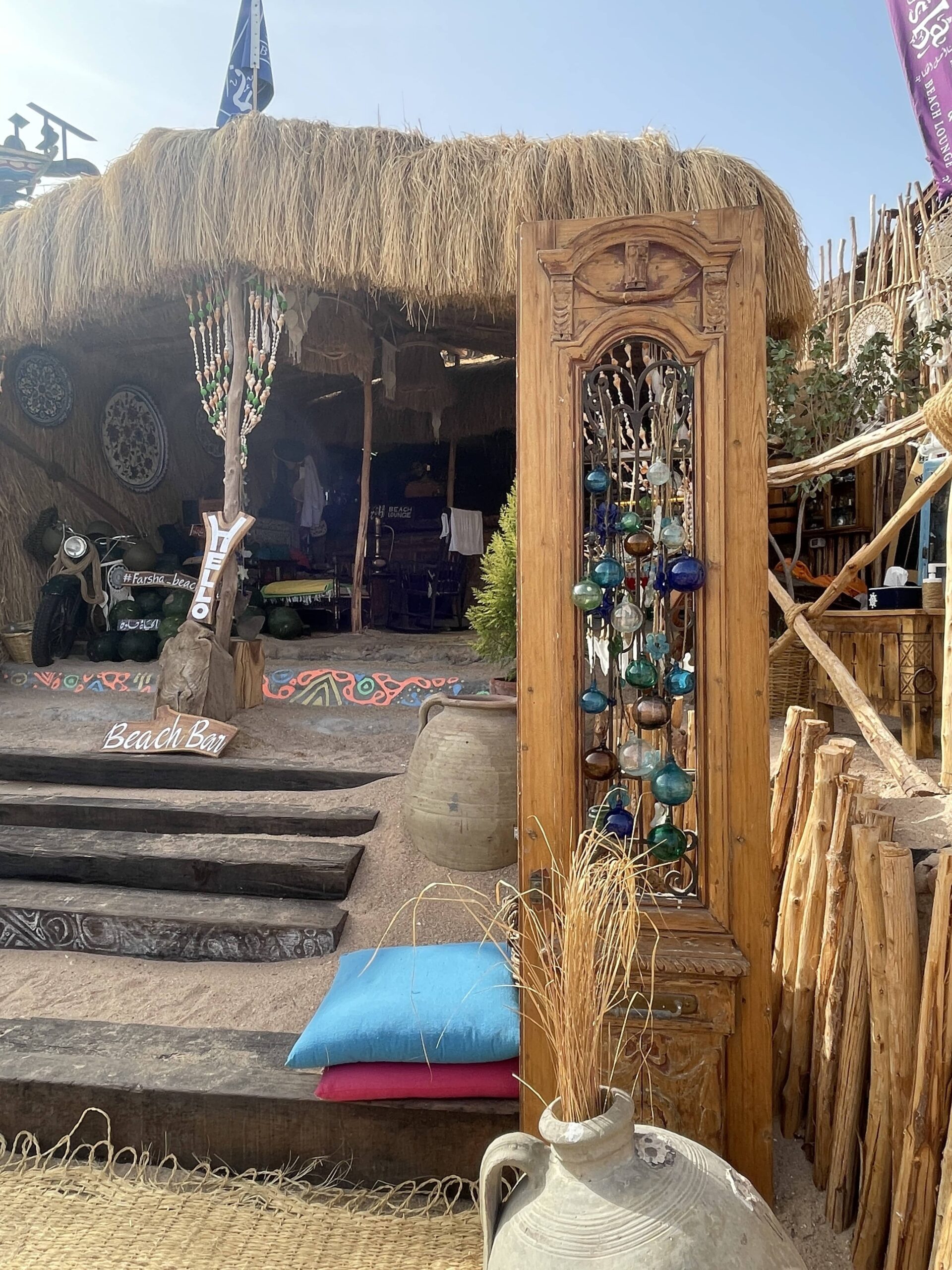
The car finally stops and shows us an entrance that in itself leaves us astonished and even more so, the panorama visible to our eyes once we cross the threshold, created from an apparently casual assembly of the most disparate ancient objects. At the top of a very long staircase that leads to the beach, we see a wonderful sea, embraced by this beach that seems, at first glance, an open-air attic where you can find huge wooden doors of ancient Egyptian houses, baskets of 50s irons, puppets, 80s motorcycles placed there together with the rest as furniture, coloured blown glass ampoules that come down from everywhere, coloured carpets that paint the landscape, an infinite number of tin containers of different sizes that together with the doors and other objects placed on a slope, make up impressive installations that are truly alternative, divided by colour and style, and at a certain point it is all clear: whoever created all this is an Artist who has been able to make a beach a work of art unique in the world! By chance (and perhaps nothing happens by chance), my group and I were under the umbrella chatting, when a guy who was clearly Egyptian but very good at speaking our language approached us. He greets us and welcomes us as a host knows how, finally wishing us a good day. It was him! And I, unstoppably curious by nature, can’t resist the sudden urge to ask him three thousand questions to find out the history of that incredible beach. An impromptu interview with Alfred could not be missed.










WHY HOST A FILM CREW IN THE SPINAL UNIT
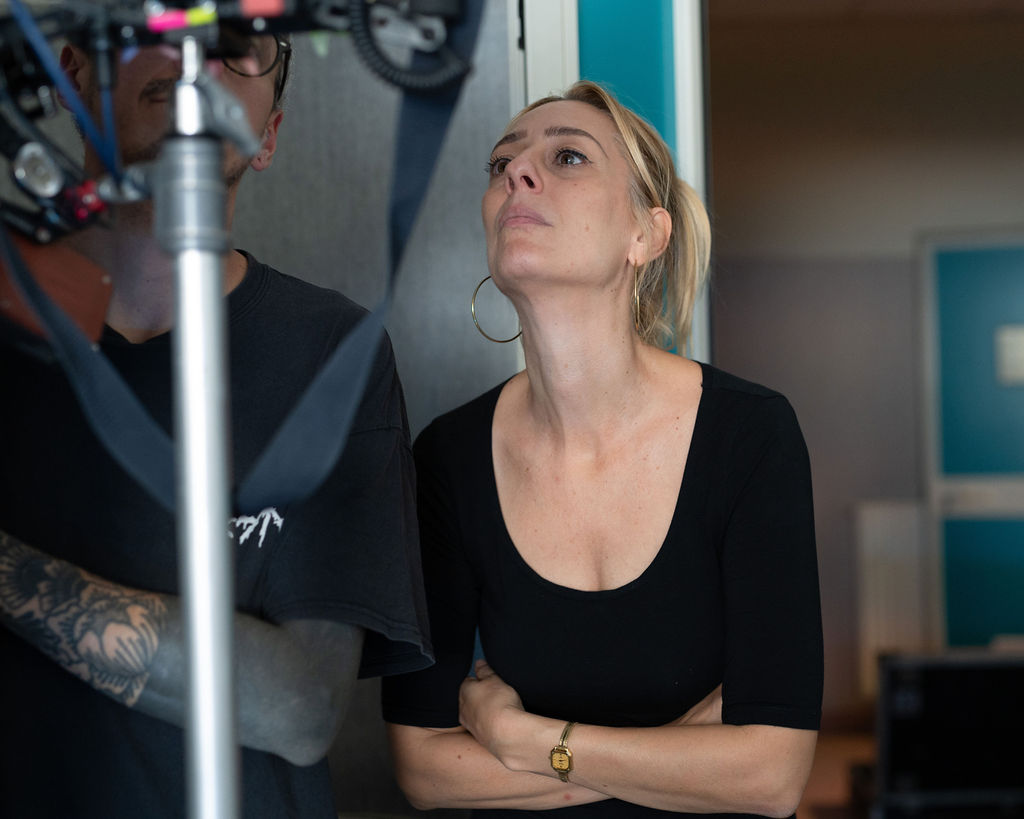
The film crew that stayed for a few days at the Spinal Unit is working on a thriller film entitled “Spyne”, written by Paolo Fittipaldi, directed by Anna Antonelli and produced by Creations Factory with the support of Liguria Film Commission where they won the FILSE call for film production.
Although the film is a thriller, it deals with the story of a person with a spinal cord injury, which is a unique opportunity to acquaint the general public with the existence of our department and, more generally, the Spinal Units. The decision to set some of the filming in this setting not only provides visibility for the facility, but also helps to raise awareness of a wide audience on a complex issue such as myelopathy, bringing to the attention of many the rehabilitation challenges that patients face on a daily basis.
Compared to a docu-film devoted entirely to myelopathy, which is aimed primarily at a niche audience consisting mostly of insiders, health professionals, or directly affected people, a genre film such as a thriller has the potential to reach a much wider audience. This implies a greater dissemination of the topic of rehabilitation while not treating the rehabilitation process in a detailed and scientifically unimpeachable manner.
The main advantage of a fictional film is that, because of its captivating plot and the popularity of the actors involved, it can attract the interest of viewers who would otherwise never delve into issues such as spinal cord injury and the rehabilitation journey. This broadening of the catchment area makes it possible to reach people who do not usually attend documentaries or medical information programs. Although the film will not offer an accurate and detailed depiction of the rehabilitation process, it does include scenes showing rehabilitation processes, providing the general public with information on how functional recovery occurs after spinal cord injury.
Another aspect to consider is the emotional impact the film can have. A work of fiction has the ability to create an emotional connection between the audience and the subject matter, thereby increasing awareness and empathy toward people with spinal cord injury. This kind of emotional involvement can have a more lasting effect than a documentary, prompting the viewer to reflect not only on the case narrated in the film, but also on real cases and the difficulties faced by para and quadriplegic people in daily life.
Enhancement of medical and health personnel.
The footage will highlight not only the department itself, but also the work of the professionals working there, showing their commitment and expertise in caring for patients with spinal cord injuries. This can help increase staff pride and improve the image of the entire health facility.
Impulse social inclusion and destigmatization.
Seeing a care setting represented in a cinematic context can help reduce the stigma associated with disability by promoting an inclusive and respectful view of people living with spinal cord injury and other disabilities. This can positively affect how the public perceives these people in daily life.
Increased visibility of the facility in the film and media landscape.
Participation in a film project can position the spinal unit as a focal point for possible future productions, attract educational or documentary projects, and foster collaborations with production companies or organizations interested in promoting health-related issues.
Therapeutic effect on patients’ psyche.
In addition to the distraction and disruption of hospital routine, the presence of a film crew can provide patients with an experience that can relieve the monotony and tension associated with prolonged hospitalization. Curiosity and excitement about an unusual event could even have beneficial effects on patients’ mood and foster a more positive mental attitude during rehabilitation.
Promoting collaboration between art and health care: This initiative demonstrates a synergy between two seemingly distant fields such as art and medicine. Film can be a powerful tool for telling stories of resilience and recovery, and allowing filming in the ward can be seen as a way to support positive life and health narratives.
Having closely followed and monitored , as is my duty, the interactions between the health care team and the film crew, I can testify how an initial transformation in the attitude of the director, actors sound engineers, actors , makeup artists and many other staff (whose names I have yet to learn) already took place as the days went by inside the ward. The level of knowledge of the problem has certainly increased in all of them. This is a foundation stone for the construction of artistic creations ever closer to reality where correct information is married with the creative genius of the artist that makes it pleasant and interesting to “listen ” to the narrative.
Direct contact with the dynamics of a complex context of care and rehabilitation such as the Spinal Unit has aroused curiosity in all of them, which, once satisfied, will determine the basis for artistic creations that are increasingly relevant to reality.
They began to perceive more clearly the daily challenges, emotions and personal stories that are intertwined in such a sensitive environment. This contact contributes to not only professional but also human growth, fostering a narrative that becomes increasingly adherent to the complexities of “rehabilitating the person.”
This builds fertile ground for the creation of artistic works that, while retaining the artist’s creative touch, manage to convey correct and detailed information regarding health issues. This is a fundamental basis for telling authentic stories that can inspire, raise awareness and bring audiences closer to difficult realities, making it “enjoyable” to listen to and understand complex issues.
Moreover, this collaboration can help break the stereotype of a distant and technical medicine, showing it instead as a human journey, where patients are protagonists and their stories become central. Art, in this sense, has the unique ability to humanize medicine, to tell the story of care as a deeply relational act in which emotions, empathy and humanity play a key role.
In conclusion, the initiative to promote collaboration between art and health care is a foundation stone for building an ever truer and deeper narrative of the world of health care. In fact, the fusion of correct information and artistic creativity can educate, excite, and ultimately contribute to a positive change in the social perception of medicine, the sick person, and the treatment process.
I hope I made the right choice in facilitating the Spinal Unit team’s participation in a large-scale film project.
Some additional sacrifice was required of the department’s professionals (doctors, nurses, OSS, physiotherapists, psychologists and administrative staff) who had to shoulder some extra constraints on their actions to make room for the needs of the film crew.
I hope, however, that, if not in the immediate term at least in the medium term, their sacrifice can be repaid by a media buzz that will bring a wide audience to learn about the complex realm of human interactions created within the Spinal Unit, the resilience of patients and their families, the self-sacrifice of professionals and the challenges they face .
Antonino Massone
Chief of Santa Corona Hospital, Pietra Ligure


ALE, FRANZ…AND HITCOCK
Sometimes life surprises me with really unexpected situations. Sometimes it is as if the dreams I had as a child suddenly materialized, once forgotten.
When I was in high school, my father and I didn’t miss an episode of Zelig. How good it was to laugh together on the sofa! And we watched it, all of it, all the way to the end, because at the end was them, Ale and Franz, or rather say Fitz and Gin. We loved that schetch of theirs!
 And then years go by, more or less 20, and from Friuli, I find myself living in Milan. And it happens one day, that. I find myself in a tiny restaurant in the Bovisa area, that in the table next to mine I see sitting just them: Ale and Franz! Heartbreak!!! I didn’t want to be the one to get up and go ask him for an autograph though…it seemed priori unfashionable 😉
So I my brain was strategizing so that I could at least talk to him a little bit, when I see Ale getting up from the table, and going outside to smoke cigarettes.
Bingo! I also go out and, I sneak him a cigarette (which never goes out of style!) and from there we start chatting, exchange numbers, keep in touch and become friends!
How strange to think of me as a little girl on the couch waiting to see them on TV and now I know them!
But this is just the premise to tell you about a specific day when something happened that is even more unbelievable.
That day I had an appointment in a studio with Ale and Franz to do a photo shoot from which we would later select photos for the poster of their new Comincium tour. First unavoidable stop: cafe coffee all together. While we were there between chats and coffee, Franz looks out the window and makes a strange face. The light outside darkens, as if it were suddenly cloudy. We all turn around and open-mouthed walk out of the bar. A gruesome spectacle! A flock of birds, just like in Hitchcock’s film, swoops down on the strange and passing cars. A truly splatter scene of which I will not show you photos to let you sleep sound dreams…because what an impression! We did not understand how this was possible. It was as if they lost altitude and could in no way climb back up from that nefarious landing.
We rush out to rescue them by dodging cars and leave the survivors in the hands of animal protection. Uneasy, we returned to the bar, paid for our coffees and finally went to do our photo shoot: crossing the threshold of the pose room was like entering another dimension, the right one! The one we were supposed to be in! And the service went very well. What a crazy memory to think about, though!
Anna Antonelli


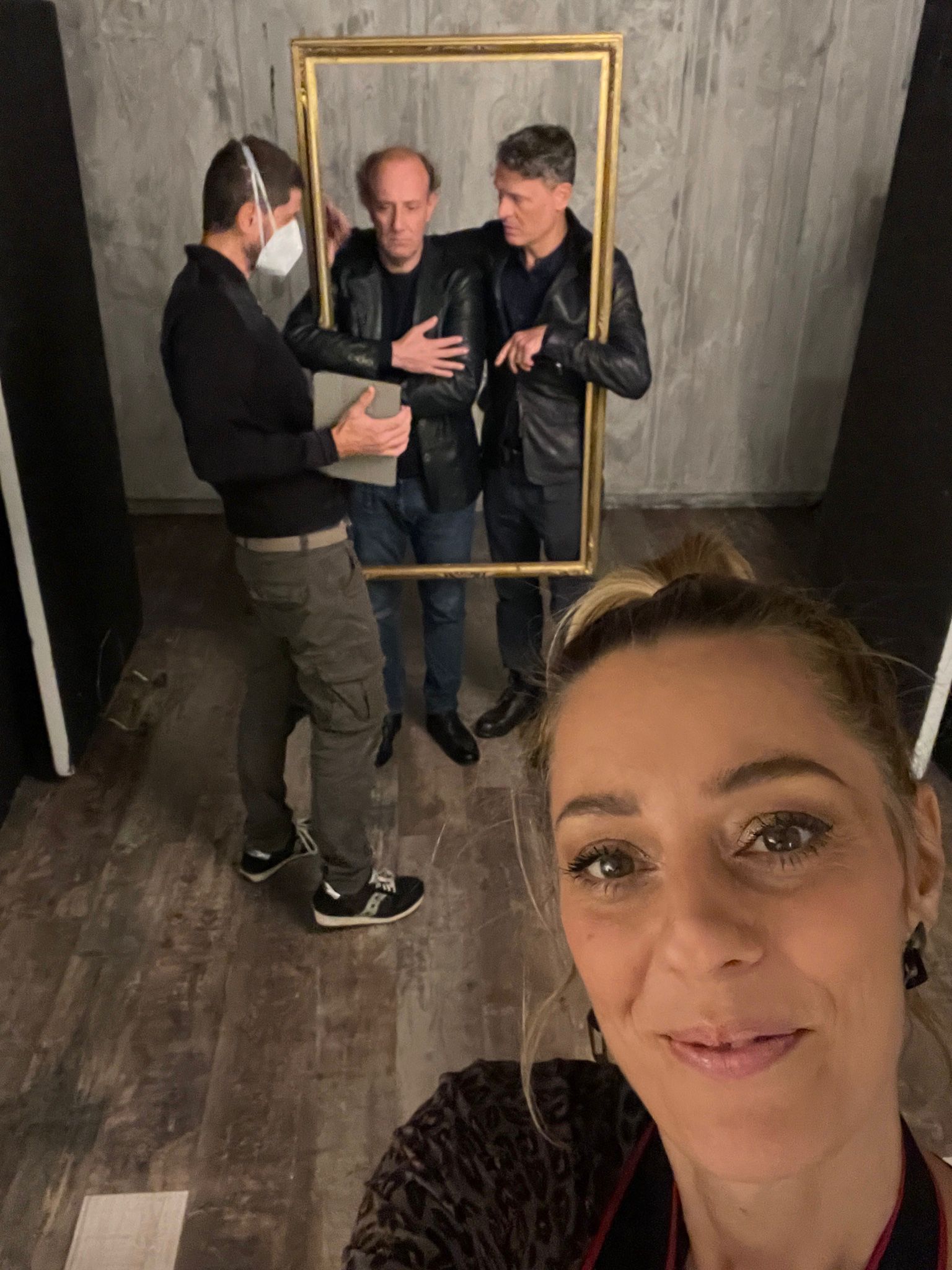

SELFIE OR PORTRAIT. THE EVOLUTION OF PHOTOGRAPHY WITH THE ARRIVAL OF SOCIAL
Cell phone or camera?
Unbelievable but true: on social media now mobile wins.
Spontaneity wins, immediacy wins. The instant you can capture in an instant wins.
We are Cowboys of a modern Wild West. In our holsters we have our inseparable Smartphone and it survives in the clash at the snap, who has the fastest hand and the quickest eye to visualize the best shot and count the most Likes. But it’s not the quality that wins, at least not on social; it’s the “I’m always there” and the resulting “I’m attached to you.”
The Like, the pursuit of “pleasure.” I have often wondered: why is there this growing need to be seen in every moment, in everything we do? To look better than we are by covering ourselves with skin smoothing filters that erase the signs of aging?
Perhaps it is because we feel we are the protagonists of a story, the story of our lives, and like actors in a Web Series, we must always look good and glossy.
Danny Boodman T.D. Lemon Nineteen Hundred, in The Legend Of The Pianist On The Ocean, said, “You’re not really screwed as long as you have a good story saved and someone to tell it to.”
And that’s the point, to have someone to tell about our life, our achievements, our thoughts. The point is to have an audience to watch our Series, because being “followed,” makes us feel more important, less alone. More interesting, less trivial. The big stars of our small screen. And here we are, always ready to tell something about ourselves and count the Likes.
I stop and think about the children of this generation. And then I think back to when I was a little girl myself and would go through my mom’s drawer to see photos of my parents when they were young. What a thrill to flip through those photos, printed in different sizes, on different papers; some glossy, some matte, some rough, some yellowed. They were photos I had flipped through hundreds of times by now, but I would look at them again in the hope that, by accident, from some corner, a new one would pop up that I had never seen. But no, because there were few of them after all. It was not easy to use analog cameras, you had to know their mechanisms, know how to set them up and hope that all the assessments were correct because there was no monitor to reveal the scene to us.
No.
There was the electricity of not having certainty, there was the anticipation of development, and there were those last moments when, at the checkout counter, you handed in your number (or name) and waited for a white envelope with the still-warm shots.
Like freshly baked brioches.
And in my heart a little voice said, “Let’s hope there are lots of good ones.”
And so out of 24 or 36 photos on a roll of film, if you were lucky, you had 10 that ended up in the scrapbook. The others in the drawer of shame.
All kidding aside, getting immortalized was not as natural and everyday as it is today. It was almost an event. For those of you who were in high school in the 1990s, you will remember that at the end of the year there was the class photo and it remained the only memory with which to see the faces of your classmates again.
Or, going even further back, just think of the photos of grandmothers, they can be counted on the tips of your fingers. They are few, rare, but they have immense value, and if you close your eyes, that photo in the silver frame, you still remember it.
And then I think back to the children of those who have had Facebook profiles for a few years. When they grow up and want to see pictures of their parents when they were young, they will probably be overwhelmed by a Tsunami of selfies-how will they choose a picture with which to remember us? How much will they know about our lives by looking at our profiles and rewinding the tape of time? And how many fantasies and mysteries do we have about our parents’ lives instead?
I don’t know whether it is better to watch everything or to imagine the stories of the past.
Whether it is better to watch a Web Series or read a book.
Whether it is better to take a Selfie or a Professional Portrait.
They are all choices that give different emotions so none is better or worse than the other.
What is certain is that the arrival of digital has changed the approach to photography a great deal, and with the following advent of Social and Smartphones, there has been another unexpected change.
But as the Web Series we are most passionate about teach us, not everything should be told in the first episode. So, now the theme song and, in the next, the second episode.
Anna Antonelli